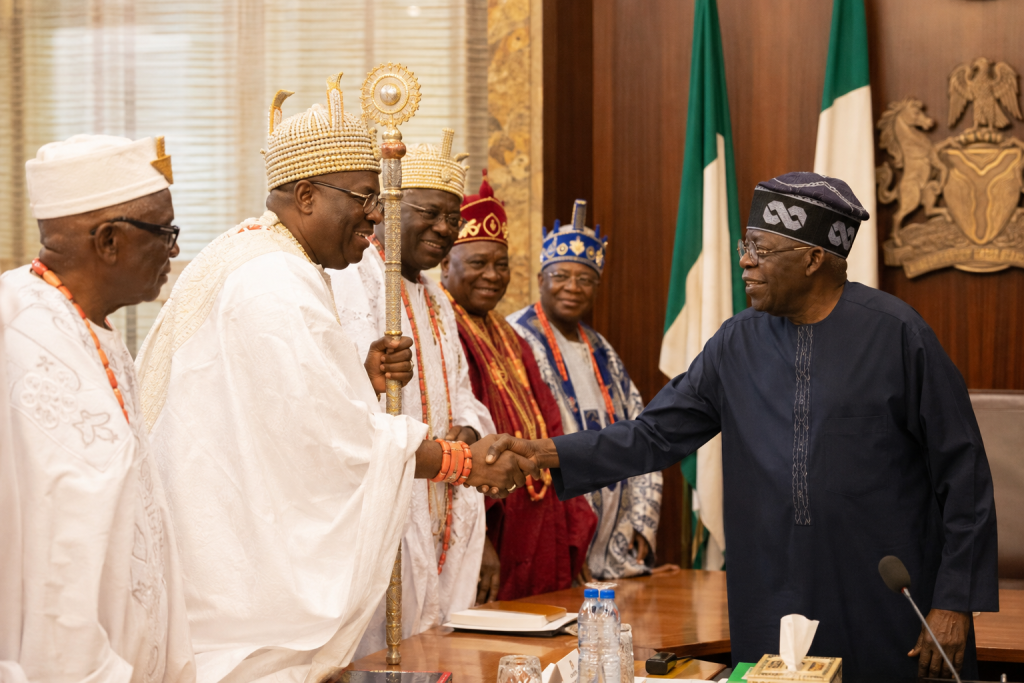
Abuja, Nigeria – President Bola Ahmed Tinubu on Thursday received a delegation of prominent traditional rulers from Oyo State at the Presidential Villa, Aso Rock, in Abuja, in a meeting that has sparked widespread public interest across the country.
The royal delegation was led by the Olubadan of Ibadanland, Oba Rashidi Adewolu Ladoja, alongside several respected first-class monarchs from different parts of Oyo State. The visit underscored the growing collaboration between Nigeria's traditional institutions and the Federal Government in addressing pressing national issues. Rashidi Adewolu Ladoja Bola Ahmed Tinubu
During the closed-door meeting, discussions reportedly centred on the country's security situation, economic development, and the vital role traditional rulers can play in promoting peace and stability within their communities.
President Tinubu reaffirmed his administration's determination to tackle insecurity, insisting that his government would not negotiate with kidnappers or pay ransom to criminal groups. He also outlined ongoing efforts to strengthen the nation's security architecture, including plans to expand the Nigerian Army, reinforce intelligence gathering, and advance reforms such as state policing.
The Oyo monarchs commended the President's firm position against kidnapping and expressed their support for measures aimed at restoring safety and public confidence. They pledged to continue working closely with security agencies by providing grassroots intelligence and encouraging peaceful coexistence within their domains.
The meeting also drew attention because it brought together influential traditional leaders at a time when Nigeria continues to confront security and economic challenges. Many observers believe the engagement reflects the increasing importance of traditional institutions in governance, conflict resolution, and community development.
While the visit was largely ceremonial, analysts say it sends a strong message that collaboration between elected leaders and revered royal fathers remains essential for national unity and sustainable development.
As Nigerians continue to seek lasting solutions to insecurity and economic hardship, many will be watching closely to see how the outcomes of such high-level engagements translate into tangible improvements across the country.