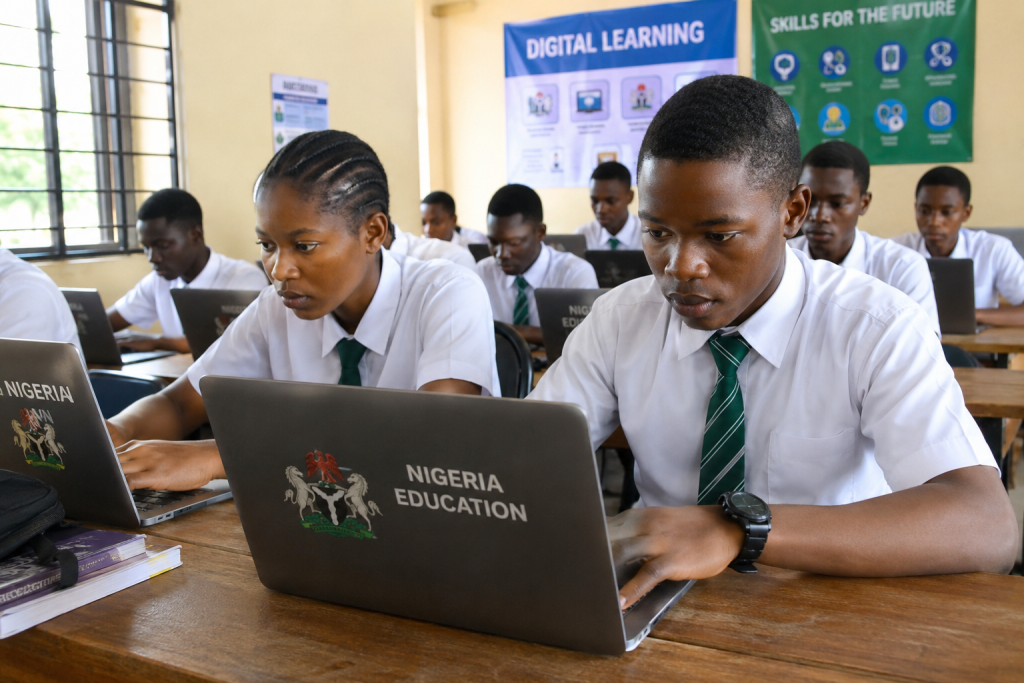
Nigeria’s education sector is undergoing a major transformation as schools, students, teachers and education stakeholders increasingly embrace digital learning, practical skills and technology-driven approaches to education.
The education sector remains one of the most important areas of national development, with experts and stakeholders continuing to emphasise the need for quality learning, improved teaching methods and better access to educational resources.
As technology continues to influence virtually every area of society, the traditional classroom is also changing. Students are increasingly exposed to online learning platforms, educational videos, digital libraries, artificial intelligence tools and other technology-based resources designed to improve learning.
For Nigeria, where millions of young people are seeking quality education and employment opportunities, the growing focus on digital education and skills development could play an important role in preparing students for the future.
The Changing Face of Education in Nigeria.
For many years, education in Nigeria was largely centred around physical classrooms, textbooks, notebooks and face-to-face teaching. While these methods remain important, the growth of internet access and digital technology has created additional opportunities for students and teachers.
Today, students can access educational materials beyond the classroom. A learner can watch a mathematics lesson online, read an electronic textbook, participate in a virtual class or research a topic using digital resources.
This development has also changed the responsibilities of teachers.
Teachers are increasingly expected not only to deliver lessons but also to guide students in using technology responsibly and effectively. Digital tools can help teachers prepare lessons, create learning materials, communicate with parents and monitor students' academic progress.
However, technology alone cannot solve every problem in the education sector. The availability of electricity, internet connectivity, affordable devices and properly trained teachers remains important for digital learning to succeed.
Why Digital Learning Matters.
Digital learning can provide students with access to educational materials regardless of their location.
A student who does not fully understand a particular topic during a classroom lesson can potentially revisit the subject through educational videos, online courses or digital learning materials.
This flexibility can be particularly useful for students who learn at different speeds.
Digital education can also support independent learning. Instead of relying entirely on the limited hours available in a physical classroom, students can continue studying outside school hours.
For example, a secondary school student preparing for an examination can combine classroom teaching with online revision materials, practice questions and educational videos.
Skills Development Is Becoming Increasingly Important.
Another major development in education is the growing emphasis on practical skills.
Academic qualifications remain important, but students are increasingly being encouraged to develop skills that can help them solve real-world problems and participate in the modern economy.
Skills such as computer literacy, coding, graphic design, digital marketing, communication, entrepreneurship, video production and other vocational abilities can provide additional opportunities for young people.
This is particularly significant in a country with a large youthful population.
Education stakeholders increasingly recognise that students need more than the ability to pass examinations. They also need critical thinking, communication, creativity, problem-solving abilities and practical skills that can be applied outside the classroom.
The Role of Teachers in Modern Education.
Despite the rapid growth of technology, teachers remain central to education.
Technology can provide information, but teachers help students understand, evaluate and apply that information.
A well-trained teacher can use digital resources to make lessons more engaging and easier to understand. Educational videos, presentations, interactive quizzes and online resources can complement traditional classroom teaching.
Teacher training is therefore an important part of the digital transformation of education.
Teachers need opportunities to learn how to use modern educational technologies effectively. They also need to understand how to protect students online and how to distinguish reliable educational information from misleading content.
Challenges Facing Digital Education.
Despite its potential benefits, digital education in Nigeria still faces several challenges.
One of the major concerns is the digital divide.
Not every student has access to a smartphone, computer, reliable internet connection or stable electricity. Students in urban areas may have greater access to digital resources than students in some rural communities.
The cost of internet data can also make online learning difficult for some families.
Another challenge is teacher preparedness. Introducing technology into schools without adequately training teachers may limit its effectiveness.
There are also concerns about online safety, misinformation, cyberbullying and excessive screen time.
These challenges mean that digital education must be introduced carefully and supported by appropriate policies, infrastructure and training.
Parents Have an Important Role to Play.
Parents can also contribute to the success of modern education.
Beyond paying school fees and providing learning materials, parents can encourage children to develop positive study habits and use technology responsibly.
Parents can monitor the type of content their children access online and encourage them to use digital devices for productive activities.
Communication between parents and schools is equally important.
When teachers and parents work together, they can identify students' academic challenges earlier and provide appropriate support.
The Future of Education in Nigeria.
The future of education is likely to involve a combination of traditional classroom teaching and digital learning.
Physical classrooms will continue to play an important role because students need social interaction, guidance and direct engagement with teachers and classmates.
At the same time, technology can provide additional learning opportunities.
Schools may increasingly adopt digital student management systems, online assessments, electronic learning materials, virtual classrooms and platforms that allow parents to monitor academic progress.
v
Artificial intelligence may also become more prominent in education. AI-powered tools can assist with research, personalised learning, lesson preparation and other educational activities.
However, students must be taught to use such technologies responsibly. Technology should support learning rather than replace genuine thinking and academic effort.
What Students Need to Prepare for the Future.
Students who want to remain competitive in an increasingly digital world should consider developing both academic knowledge and practical skills.
Some important areas include:
- Digital literacy
- Communication skills
- Critical thinking
- Problem-solving
- Creativity
- Entrepreneurship
- Research skills
- Computer skills
- Financial literacy
- Collaboration and teamwork
- Responsible use of artificial intelligence
These skills can complement formal education and help students adapt to changing opportunities.
Conclusion
Education remains a powerful tool for national development, but the needs of students are changing.
The modern education system must prepare young people not only to pass examinations but also to think critically, solve problems, communicate effectively and contribute meaningfully to society.
Digital learning, teacher development and practical skills training can provide important opportunities for improving education in Nigeria.
However, achieving meaningful progress will require cooperation among government agencies, schools, teachers, parents, technology providers and other stakeholders.
As Nigeria's young population continues to grow, investment in quality education and skills development will remain essential to building a productive and innovative generation.
For students, the message is clear: education is no longer limited to what happens inside the classroom. Learning can continue anywhere, and developing relevant skills may be just as important as obtaining academic qualifications.