By NovaNews24/7 News Desk
August 11, 2026
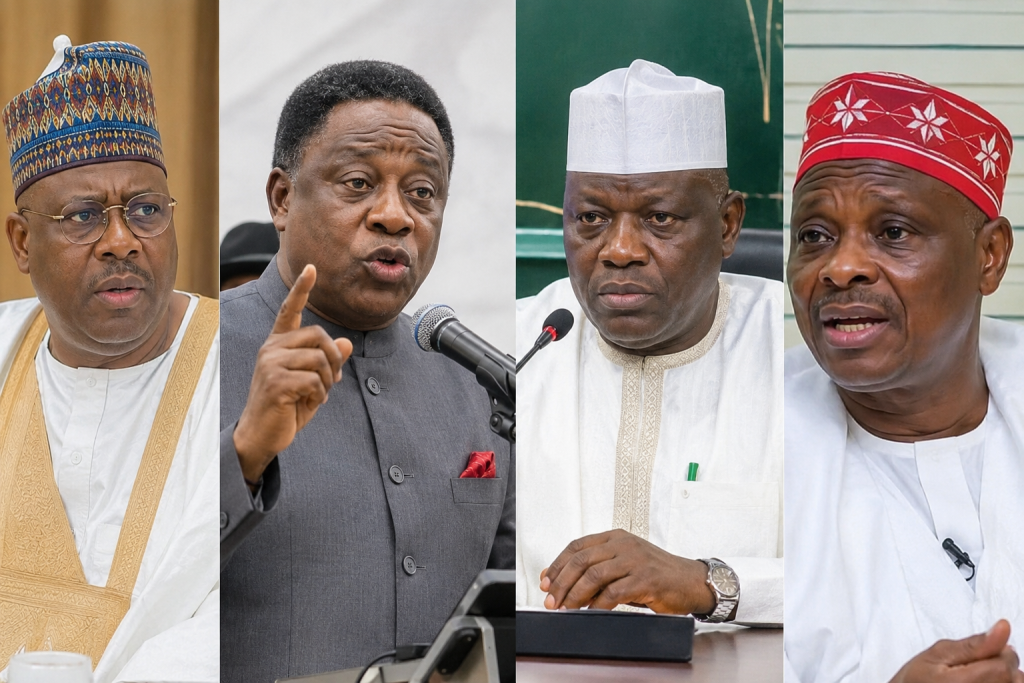
A fresh religious controversy is brewing in Nigeria after prominent Islamic cleric Sheikh Sani Yahaya Jingir made comments in support of another Muslim-Muslim presidential ticket ahead of the 2027 general elections.
Jingir's remarks have triggered strong reactions from political figures, Christian leaders and other Nigerians, with critics warning that the language used could deepen religious divisions in an already sensitive political environment.
The controversy has once again pushed the relationship between religion and politics in Nigeria into the national spotlight.
What Did Sheikh Jingir Say?
Sheikh Jingir reportedly made the comments at a gathering in Kano attended by Kano State Governor Abba Yusuf and Jigawa State Governor Umar Namadi.
The cleric reiterated his support for the Muslim-Muslim presidential ticket that was adopted by President Bola Tinubu and Vice President Kashim Shettima in the 2023 presidential election.
Jingir called on Muslims to continue supporting Muslim-Muslim candidates and argued that Muslims should not apologise for supporting candidates from their faith.
He also made remarks concerning the religious population of Nigeria and referred to opponents of his position using language that has generated particular concern.
According to reports by Punch and Premium Times, the remarks included a reference to Christians as “infidels” while he was urging Muslims to mobilise politically.
The comments quickly spread online, generating a wave of criticism.
Christian Leaders React
The Chairman of the Northern Christian Association, Rev. Joseph John Hayab, criticised the comments and argued that religious leaders should be promoting unity rather than deepening divisions.
Hayab also called for religion to be included as a question in Nigeria's next national census.
His argument is that Nigeria currently lacks official, reliable figures showing the exact religious composition of the country, yet claims about religious numerical superiority are increasingly being used during political arguments.
“Let us really know who is in this country and what the percentages are,” Hayab was reported as saying.
The Northern Christian leader said reliable data could help prevent unverified claims about which religious group constitutes the majority.
Fani-Kayode Condemns the Remarks
Former Aviation Minister Femi Fani-Kayode has also criticised Jingir's comments.
Fani-Kayode described the rhetoric as provocative and warned that it could create additional religious tension ahead of the 2027 election.
He also rejected the description of Nigeria as a Muslim country, maintaining that Nigeria is a secular and multi-religious nation.
Interestingly, Fani-Kayode said his own support for a Muslim-Muslim ticket is based on the qualities and political strength of the candidates rather than their religion.
Kwankwaso Also Rejects the Comments
Former Kano State Governor and NNPP presidential candidate Rabiu Kwankwaso has also criticised the remarks.
Kwankwaso reportedly stated that the people of Kano did not endorse or support the divisive comments.
He called on political and religious leaders to exercise responsibility and avoid statements that could further divide Nigerians along religious lines.
Why the Controversy Matters
The latest development is significant because Nigeria is approaching another major election cycle.
The 2027 presidential election is expected to generate intense debates over security, the economy, unemployment, corruption, governance and the performance of the current administration.
However, the renewed debate over a Muslim-Muslim ticket could make religion an even more prominent factor in the election.
The issue is particularly sensitive because Nigeria is home to large Christian and Muslim populations, alongside adherents of traditional religions and Nigerians who do not identify with a particular faith.
Critics of religiously driven political rhetoric argue that elections should be determined by competence, policies, character and performance rather than religious identity.
A Bigger Debate About Religion and Politics
The controversy also raises a broader question: How much influence should religious leaders have over political choices in Nigeria?
Religious leaders have historically played important roles in Nigerian politics, particularly in mobilising communities and influencing voters.
Supporters of religious political mobilisation argue that every citizen has the constitutional right to support candidates who share their beliefs.
Opponents, however, warn that religious mobilisation can become dangerous when political competition turns into a contest between religious groups.
The latest comments have therefore revived concerns about whether Nigeria's political class and religious leaders can prevent the 2027 election from becoming unnecessarily polarised along religious lines.
Calls for Restraint Grow
As reactions continue, the central issue is no longer simply whether Nigerians should support a Muslim-Muslim or Christian-Christian ticket.
The bigger concern is whether political competition can take place without portraying fellow Nigerians of another faith as enemies.
Nigeria has faced years of insecurity, economic hardship, unemployment and social tension. Religious leaders from both major faiths have repeatedly been called upon to promote peace and discourage inflammatory rhetoric.
The latest controversy has therefore renewed calls for politicians and religious leaders to choose their words carefully as the country moves closer to the 2027 elections.
What Happens Next?
It remains to be seen whether Sheikh Jingir will respond to the criticism or clarify his comments.
What is already clear, however, is that the controversy has reignited one of Nigeria's most sensitive political debates: the role of religion in presidential elections.
With the 2027 election approaching, Nigerians are likely to hear much more about religious identity, political alliances and the future of the Muslim-Muslim ticket.
For many citizens, the bigger question will be whether political leaders can move the conversation away from religious numbers and toward the issues affecting everyday Nigerians — security, jobs, food prices, education, healthcare and good governance.
SEO Keywords
Sheikh Jingir, Muslim-Muslim ticket, Nigeria religious controversy, 2027 election Nigeria, Muslim-Muslim ticket 2027, religious tension in Nigeria, Nigeria religion news, Sheikh Yahaya Jingir, Northern Christian Association, Femi Fani-Kayode, Rabiu Kwankwaso, Tinubu 2027, Nigeria politics and religion
Suggested Meta Description
Sheikh Jingir's Muslim-Muslim ticket remarks have sparked controversy in Nigeria, drawing reactions from Christian leaders and politicians ahead of the 2027 election.